

By Joy Onu
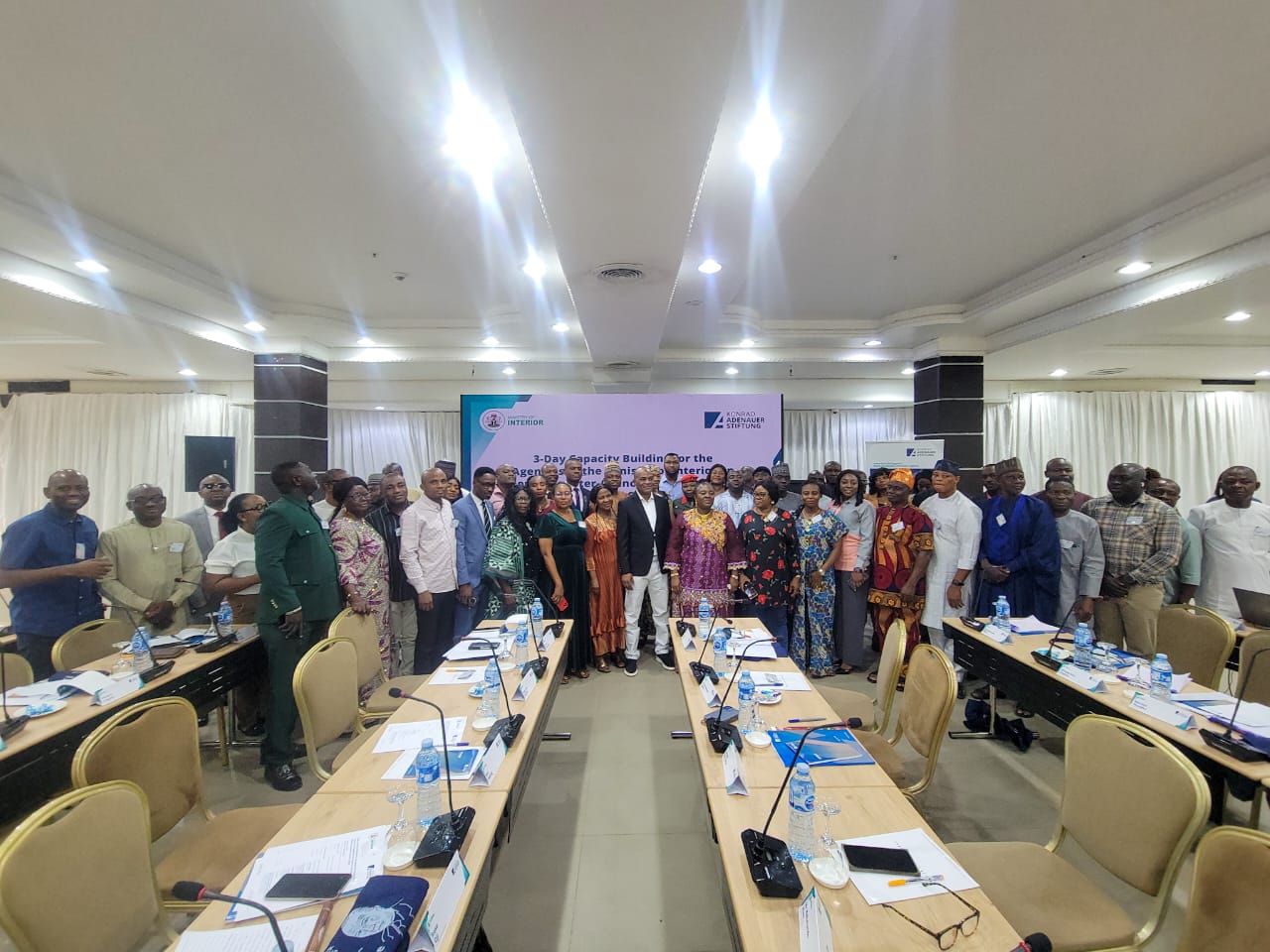
Coordination within Nigeria’s internal security architecture is once again in focus as the Ministry of Interior convened senior officials for a two-day strategy session aimed at strengthening collaboration among its agencies.
Rather than operating in silos, officials say agencies must begin functioning through structured cooperation, particularly as security threats grow more complex and interconnected.
At the heart of the discussion is a growing concern that fragmented responses weaken national security outcomes. Representing the Minister of Interior, Olubunmi Tunji-Ojo, Chief of Staff Maina Tamuna underscored the need for clearer operational alignment, warning that effective internal security depends not just on resources, but on coordination, clarity of roles, and shared responsibility.
The training, supported by Konrad Adenauer Stiftung (KAS), focuses on building practical frameworks that enable agencies to respond collectively to threats targeting critical infrastructure and national assets.
Officials linked the initiative to the policy direction of President Bola Ahmed Tinubu, particularly reforms under the Renewed Hope Agenda that prioritise accountability, professionalism, and intelligence-led operations within government institutions.
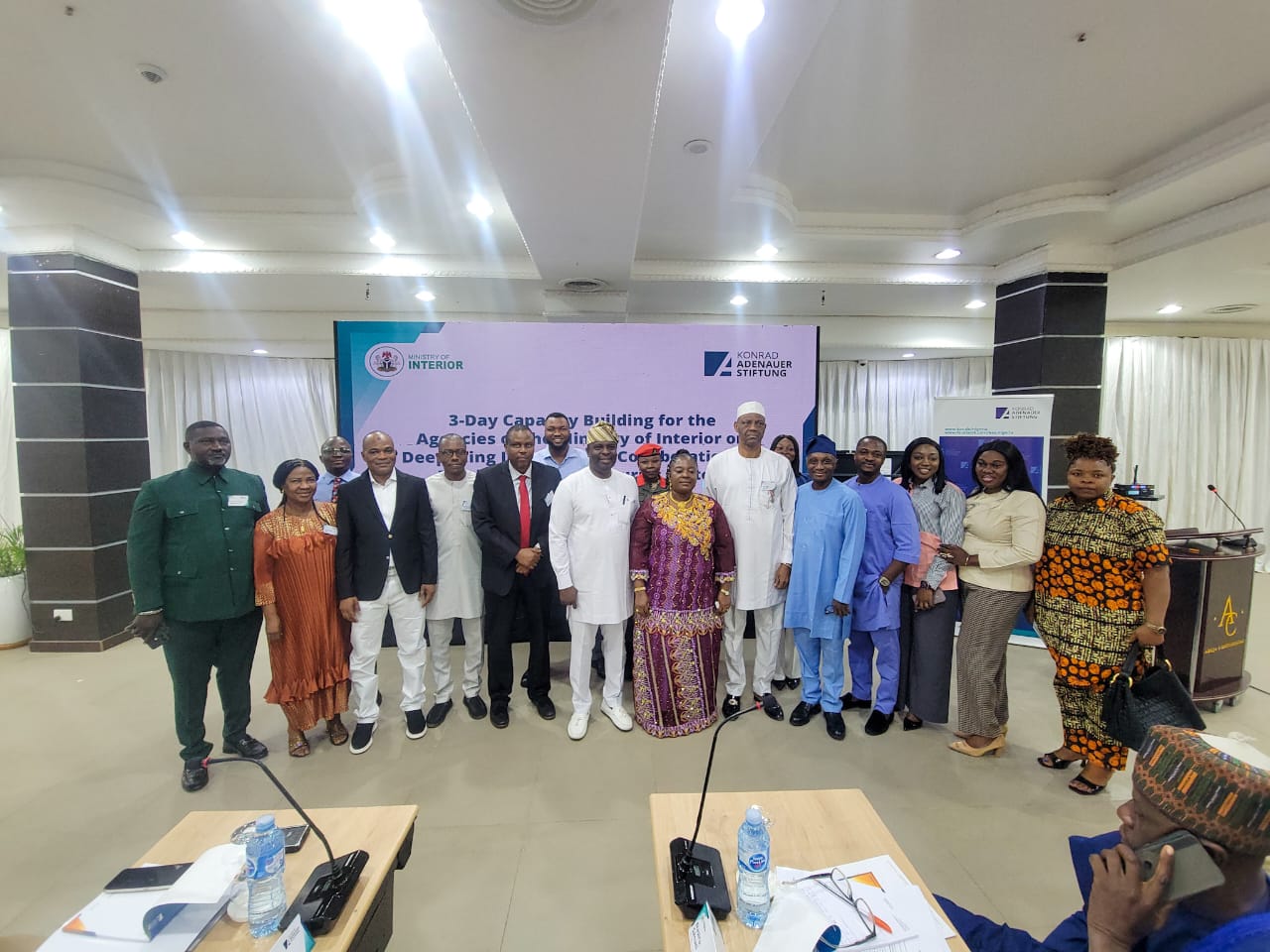
Speaking to participants, the Minister’s Special Adviser on Training, Tunji Odewunmi, described the session as a foundational step toward institutional synergy, urging senior officers to convert discussions into measurable changes in operational culture.
Security observers have repeatedly identified inter-agency rivalry and coordination lapses as persistent weaknesses within Nigeria’s security framework. The ministry’s latest move signals recognition that structural collaboration — not just policy statements — will determine the effectiveness of internal security efforts.
Participants at the programme include board members, senior officers, and aides drawn from the four paramilitary agencies under the ministry.
