

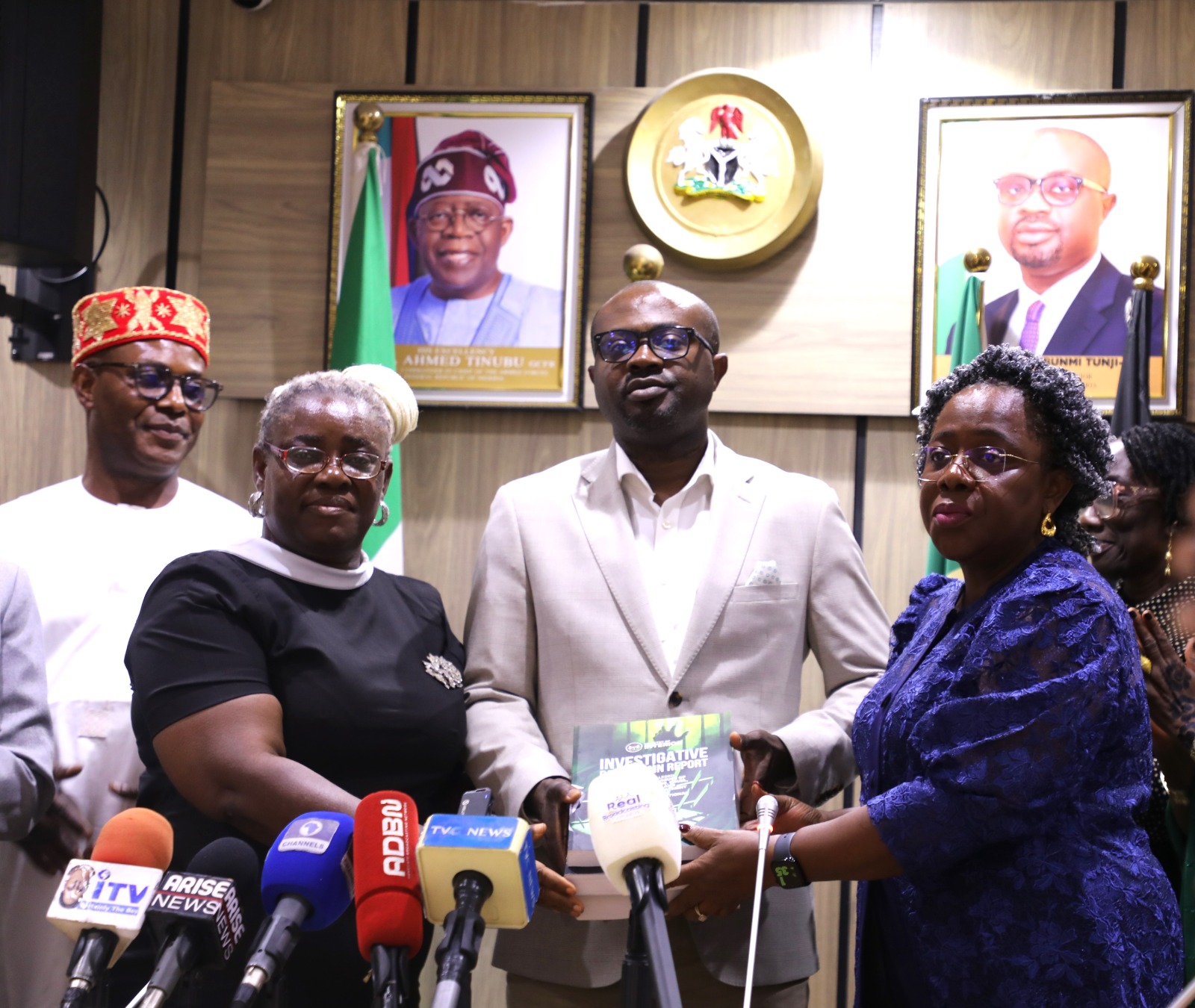
The Federal Government has moved to activate far-reaching reforms in Nigeria’s correctional system following the submission of a fresh investigative report examining allegations of corruption and operational violations within custodial centres nationwide.
The report, presented in Abuja on Wednesday, is expected to drive a new phase of restructuring aimed at improving accountability, expanding facility capacity, and strengthening rehabilitation programmes across the Nigerian Correctional Service.
Minister of Interior, Olubunmi Tunji-Ojo, said the findings would not remain on paper, stressing that government was already preparing an implementation framework to ensure that the recommendations translate into concrete reforms within the system.
He explained that the correctional sector remains central to national security and social stability, noting that conditions in custodial centres must reflect dignity, fairness, and a commitment to reintegration rather than punishment alone.
Tunji-Ojo added that oversight mechanisms would be strengthened to track compliance and measure progress, while reforms would align with the broader agenda of the current administration on justice sector renewal.
He also drew attention to the pressure on existing facilities, disclosing that Nigeria’s custodial infrastructure, built for about 68,496 inmates, is currently holding more than 80,000 persons. According to him, new correctional complexes under construction in Abuja and Kano are expected to provide about 33,000 additional spaces.
Data presented during the briefing also showed a significant drop in recidivism, with repeat offenders reducing from 11,616 in 2023 to 3,156 in 2024 and further down to 1,392 in 2025.
The Minister further outlined ongoing rehabilitation efforts, including formal education programmes currently engaging inmates at various levels. These include 62 postgraduate students, 261 undergraduates, and over 1,125 participants in structured learning schemes, supported by 18 study centres under the National Open University system within correctional facilities.
He added that vocational training remains a key component of rehabilitation, with inmates involved in trades such as tailoring, welding, carpentry, agriculture, electrical installation, soap production, and other skills aimed at easing reintegration after release.
On alternatives to incarceration, he said 1,227 individuals have benefited from non-custodial measures such as probation, community service, and restorative justice, describing them as essential tools for reducing pressure on custodial centres.
Chairman of the investigative panel, Magdalene Ajani, said the exercise involved extensive consultations and detailed examination of conditions within correctional facilities across the country. She expressed optimism that the recommendations would be fully implemented.
The panel’s Secretary, Uju Agomoh, urged authorities to make the report accessible to the public, arguing that openness would strengthen confidence in ongoing reforms.
Comptroller-General of the Nigerian Correctional Service, Sylvester Nwakuche, pledged the readiness of the service to implement the recommendations in collaboration with other criminal justice agencies, including the police and judiciary.
The report is expected to shape a broader restructuring of Nigeria’s correctional architecture, with emphasis on accountability, rehabilitation, and improved welfare standards for inmates.
