

FG Rolls Out New Hypertension Policies, Experts Urge Nigerians to Check Blood Pressure RegularlyThe Federal Government has introduced new policies and guidelines aimed at improving the early detection, prevention, and management of hypertension across Nigeria, as health experts warned that the condition remains one of the leading silent killers in the country.
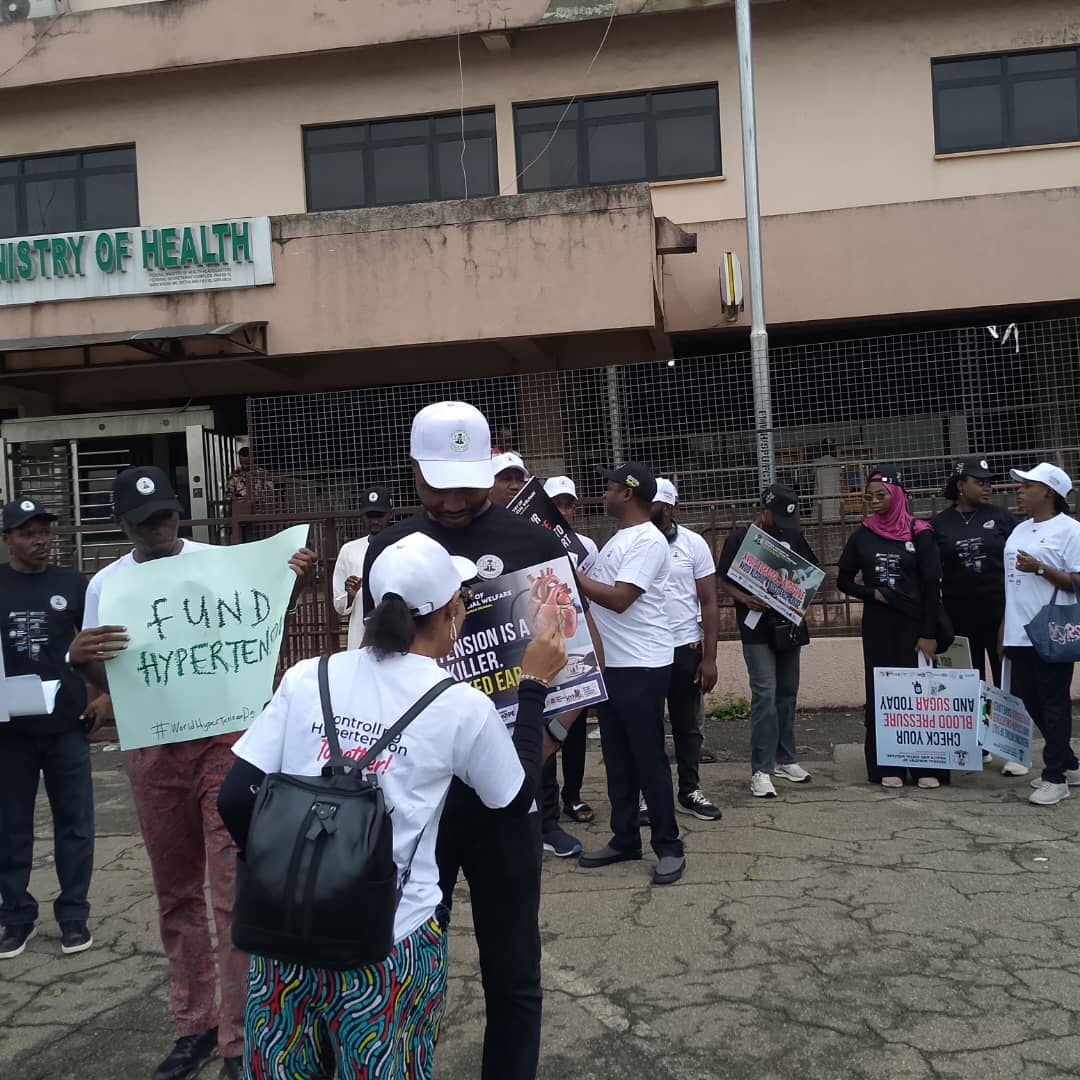
The announcement was made in Abuja during a public awareness road walk organised to commemorate the 2026 World Hypertension Day by the Federal Ministry of Health and Social Welfare.
Speaking during the exercise, Dr. Malau M. Toma, Head of Cardiovascular Diseases and Tobacco Control under the Ministry’s Division of Non-Communicable Diseases, said the initiative was designed to strengthen public awareness and encourage Nigerians to take routine blood pressure checks seriously.
According to him, this year’s theme, “Controlling Hypertension Together: Check Your Blood Pressure Regularly, Defeat the Silent Killer,” highlights the importance of regular screening and adherence to medication for individuals diagnosed with high blood pressure.
Dr. Toma described hypertension as a dangerous condition that often develops without obvious symptoms but can lead to severe complications such as stroke, heart disease, kidney failure, and blindness if left uncontrolled. He explained that the government has strengthened primary healthcare facilities nationwide to provide first-level diagnosis and management of uncomplicated hypertension cases, while also intensifying public sensitisation campaigns to address myths and misconceptions surrounding the disease.
The health expert further advised Nigerians to adopt healthier lifestyles by engaging in regular physical activity, avoiding tobacco and nicotine products, reducing excessive fat and oil consumption, and increasing fruit intake.
Also speaking at the event, Dr. Suleiman Lamorde, Head of Non-Communicable Diseases at the National Primary Health Care Development Agency, said hypertension has become a growing global health concern and remains responsible for numerous health complications among Nigerians.
He stated that government, in collaboration with development partners, has expanded hypertension care services to communities through primary healthcare centres across the country.
Dr. Lamorde disclosed that over 9,000 revitalised primary healthcare facilities are currently operational nationwide, noting that every ward is expected to have a functional comprehensive PHC capable of managing simple hypertension cases. He encouraged Nigerians, particularly adults from the age of 18, to regularly monitor their blood pressure, stressing that early detection remains one of the most effective ways to prevent complications.
According to him, people above the age of 50 and those with a family history of hypertension should check their blood pressure at least once weekly, adding that blood pressure checks are available free of charge at healthcare facilities.
Representatives of development partners also commended the Federal Government’s efforts in tackling hypertension and other non-communicable diseases.
Dr. Ademuyiwa Damilola, Director of Programmes at the Legislative Initiative for Sustainable Development (LISDEL), and Dr. Onyekachukwu Osabiku, Senior Technical Advisor on Hypertension Control at Resolve to Save Lives (RTSL), called for increased funding and stronger intervention programmes for non-communicable diseases similar to those available for HIV/AIDS and malaria.
The experts pledged continued support towards reducing the burden of hypertension in Nigeria by supporting patient communities, improving access to healthcare facilities, and amplifying the voices of people living with the condition.
Dr. Osabiku revealed that Resolve to Save Lives is currently partnering with the Nigerian government in Kano and Ogun states under the Nigeria Hypertension Control Initiative in collaboration with the National Primary Health Care Development Agency and state ministries of health.
He added that plans are underway to expand the initiative to more states, while calling on government agencies, stakeholders, development partners, and individuals living with hypertension to work together in addressing the growing health challenge.
