

By Joy Onu, Abuja
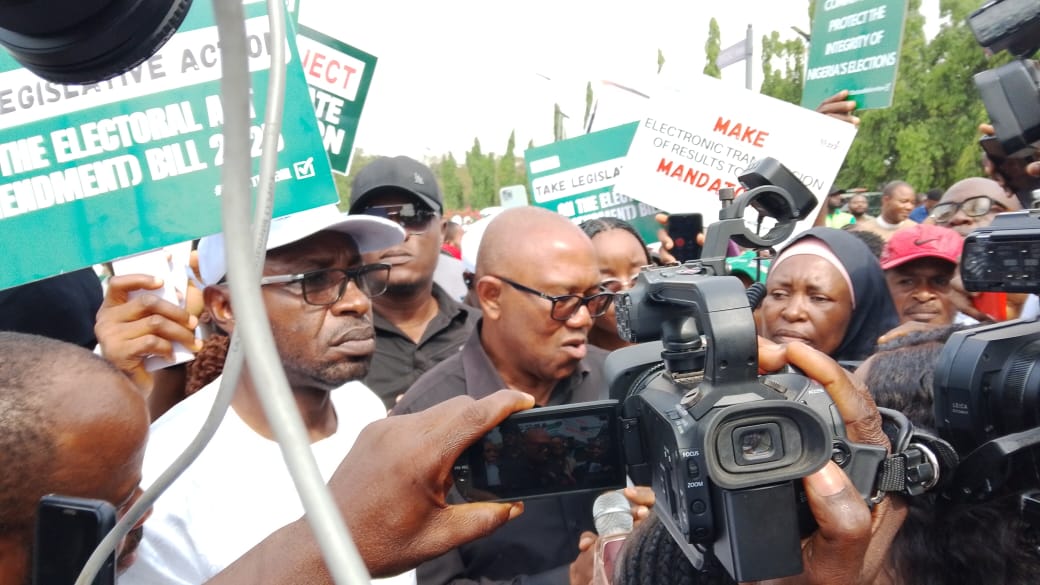
Former presidential candidate Peter Obi on Monday February 9, 2026 emerged at the National Assembly alongside a large crowd of protesters, lending his voice to a growing opposition push against alleged manipulation of Nigeria’s electoral process.
The demonstration, coordinated by the National Opposition Movement, brought together opposition politicians, civil society actors, election observers, and rights advocates, all pressing for reforms they say are critical to restoring public confidence in elections.
Security presence around the National Assembly was significantly reinforced as protesters occupied strategic access points, briefly limiting vehicular and pedestrian movement around the complex.
Speaking during the protest, Obi described Nigeria’s electoral system as deeply compromised, warning that continued disregard for the people’s votes threatens the country’s democratic foundations. He said Nigeria must reclaim its moral authority on the continent by ensuring that elections genuinely reflect the will of voters.

Civil society groups were prominently represented at the protest, including ActionAid Nigeria, Situation Room, and several other advocacy organisations. Activists said the turnout reflected widespread frustration with how election outcomes are determined after voting has concluded.
Also addressing journalists at the scene, the National Deputy Publicity Secretary of the African Democratic Congress (ADC), Hon. Queen, said the protest was driven by anger over recurring inconsistencies between polling unit results and final announcements.

She argued that election outcomes should be transparently transmitted without alterations, stressing that anything short of that undermines the credibility of the entire process. According to her, the National Assembly has failed to respond meaningfully to repeated public calls for reform, particularly as the 2027 general elections draw closer.
Also speaking, the spokesperson of the National Opposition Movement, Mr. Ike, linked the protest to reports that lawmakers had declined to make electronic transmission of results mandatory. He said such a decision, if confirmed, would further weaken the electoral process.
Ike described result collation as the most vulnerable stage of elections, alleging that manipulation often occurs after voting has ended. He called for tougher legal consequences for individuals found altering election results, insisting that the votes of millions should not be determined by a few officials behind closed doors.

Protest leaders dismissed claims that technological limitations prevent electronic transmission of results, pointing to the widespread use of digital payment systems and electronic infrastructure across the country.
They warned that the protest would not end with Monday’s demonstration, stating that a formal communication had been submitted to the National Assembly and that further actions would follow if their demands were ignored.
The protest represents one of the strongest coordinated opposition actions in recent months, highlighting rising political tensions as debates over electoral reform intensify nationwide.
