


By Joy Onu
The Nigeria Police Force and the Nigerian Correctional Service have reaffirmed their commitment to deepening inter-agency cooperation aimed at strengthening national security, improving intelligence sharing, and addressing overcrowding in custodial centres across the country.

The renewed partnership was highlighted during a high-level courtesy visit by the Inspector-General of Police, Olatunji Rilwan Disu, and his delegation to the Controller-General of Corrections, Sylvester Ndidi Nwakuche, at the headquarters of the Nigerian Correctional Service in Abuja.

During the engagement, the Inspector-General described the meeting as a strategic step toward reinforcing the longstanding relationship between the two agencies. He stressed the need for closer operational coordination, including improved direct communication channels among officers to enable quicker responses to security incidents.
He noted that the evolving security environment, including emerging threats to custodial facilities and risks faced by personnel of both agencies, makes sustained collaboration essential. According to him, enhanced intelligence sharing and joint training initiatives would significantly improve operational effectiveness.

In his response, the Controller-General of the Nigerian Correctional Service commended the Nigeria Police Force for its continued support, noting that both agencies have worked closely in managing security challenges, particularly those involving correctional facilities.
He raised concern over the increasing congestion in custodial centres, disclosing that the inmate population is nearing 80,000, with over 60 percent of them awaiting trial. He explained that the situation continues to strain facilities and limits the effectiveness of rehabilitation and reintegration programmes.

The Controller-General further called for stronger collaboration among key stakeholders, including the police and the judiciary, to reduce delays in the criminal justice process and address the growing number of awaiting trial inmates.

The meeting also emphasized the importance of custodial centres as potential sources of intelligence that could support broader national security efforts if properly harnessed.
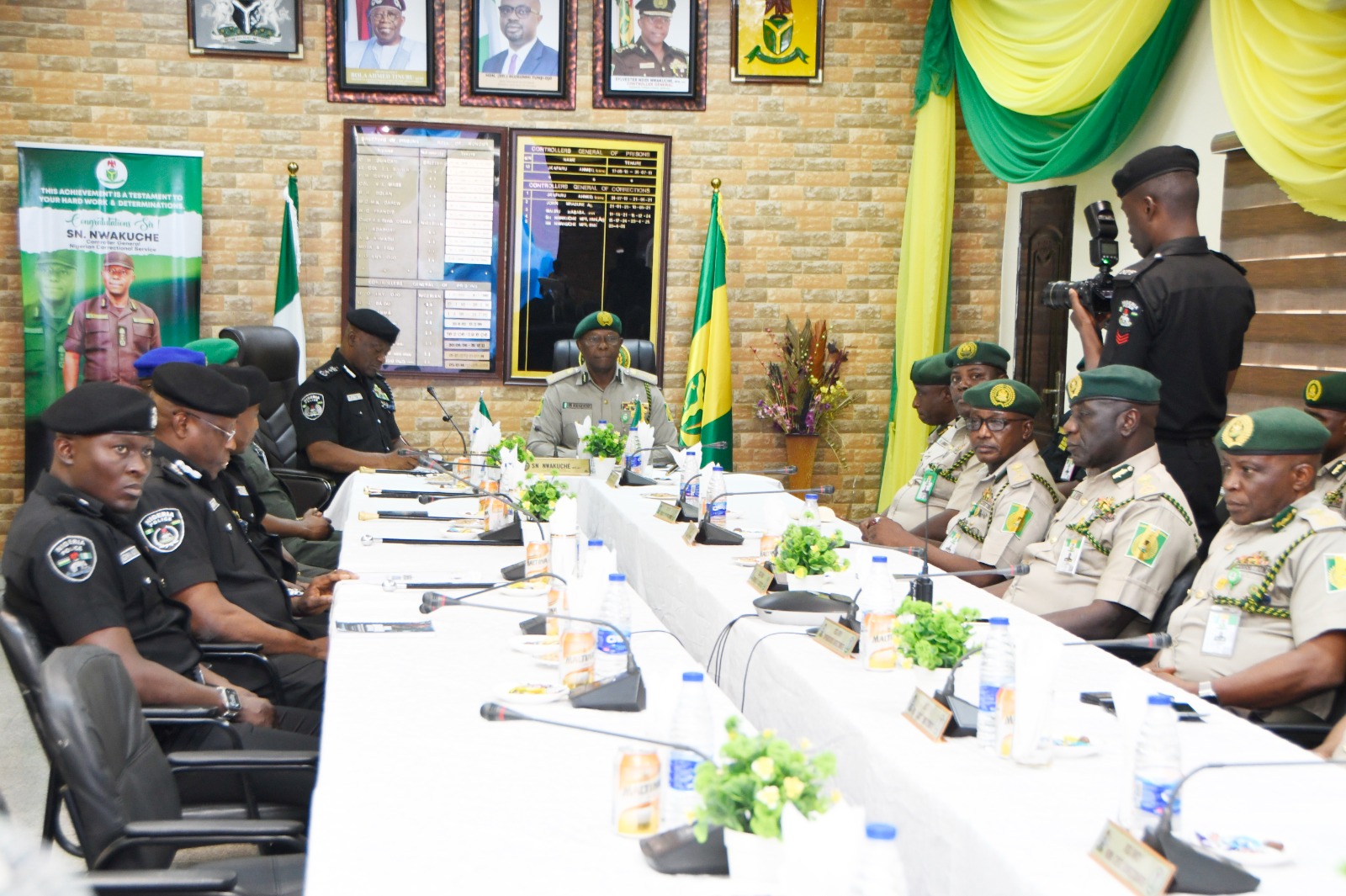
Both institutions reaffirmed their commitment to strengthening existing frameworks for cooperation, improving communication systems, and ensuring sustained collaboration in tackling security challenges, preventing custodial breaches, and promoting public safety across the country.
