


By Joy Onu, Abuja
The Federal Government’s unveiling of the 2026 Seasonal Climate Prediction (SCP) has once again placed climate data at the centre of national development planning, raising critical questions about how effectively Nigeria’s institutions translate forecasts into policy action.
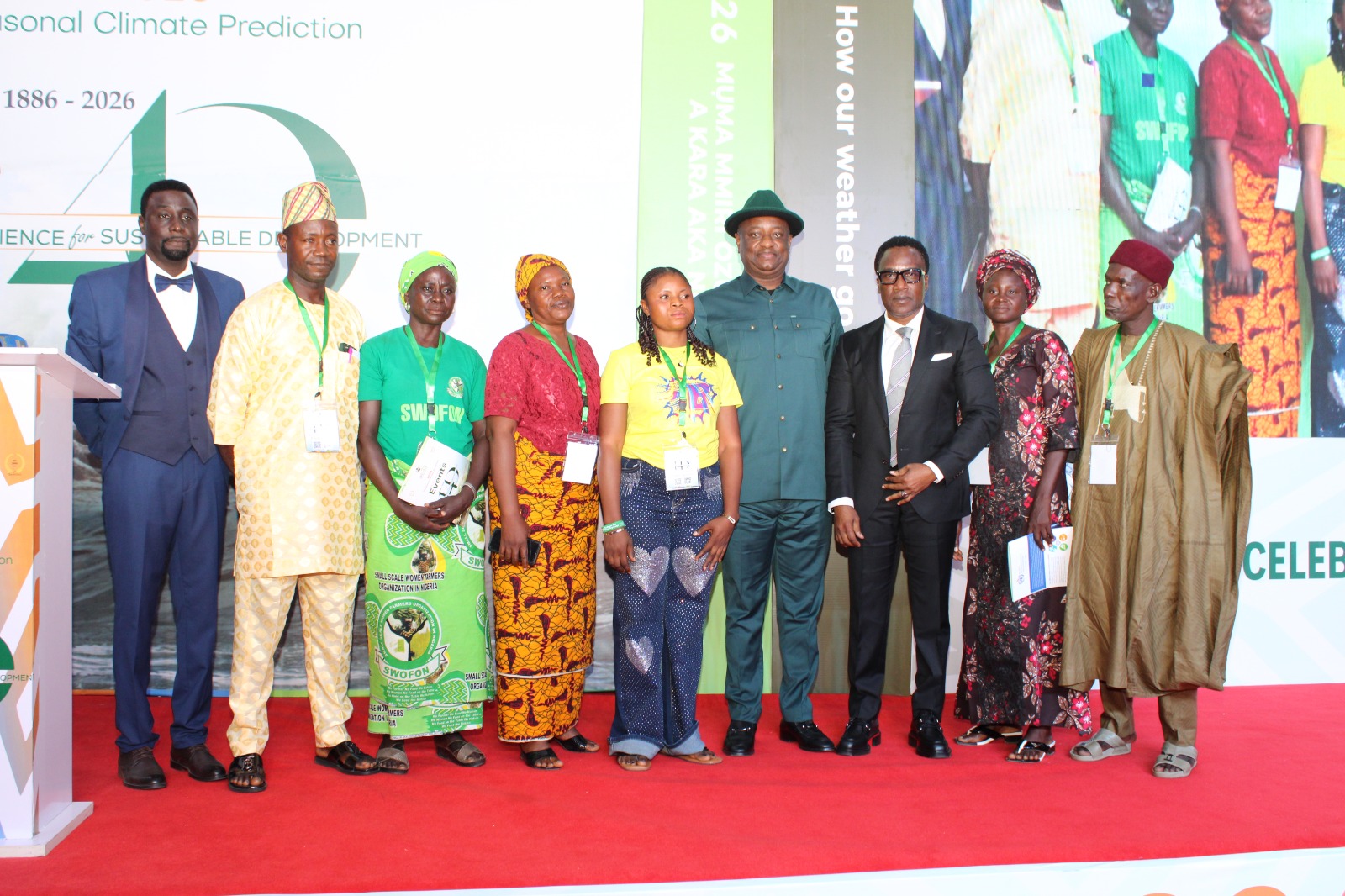
Presented by the Nigerian Meteorological Agency (NiMet) in Abuja on Monday, the climate outlook offers early warnings on rainfall patterns, temperature trends and dry spells that will shape agriculture, infrastructure resilience, aviation safety and disaster preparedness in the coming year.
At the presentation, the Minister of Aviation and Aerospace Development, Mr. Festus Keyamo, SAN, acknowledged that climate variability is no longer a distant risk but a daily governance challenge affecting food security, economic stability and national security.
While government officials highlighted the alignment of the 2026 forecast with the Renewed Hope Agenda of the Tinubu administration, policy analysts note that Nigeria’s core challenge lies not in the availability of climate data, but in its consistent application across ministries, states and local governments.
According to projections outlined at the event, early rainfall onset is expected in parts of the South and Middle Belt, while late onset is anticipated in Borno State. Most parts of the country are projected to experience normal annual rainfall, alongside localised areas of above-normal and below-normal precipitation.
These projections, experts say, present an opportunity for proactive planning—particularly for agriculture, flood control, water management and infrastructure development—if acted upon early by relevant authorities.
However, past experience suggests that climate forecasts often remain underutilised in budget planning, project design and emergency preparedness, leaving communities exposed to avoidable climate shocks.
Mr. Keyamo stressed that development initiatives not guided by credible climate information remain vulnerable and unsustainable, calling for sustained investment in climate science, human capacity and effective dissemination of climate data at all levels of governance.
Beyond aviation safety, the policy relevance of the SCP extends to food production planning, public health preparedness, energy supply, transportation networks and disaster risk reduction—sectors where delayed or poorly coordinated responses have previously amplified the human and economic costs of extreme weather events.
The Permanent Secretary of the ministry, Dr. Yakubu Adam Kofarmata, described the SCP as a strategic national resource, arguing that climate-informed decision-making is indispensable for long-term socio-economic growth in a climate-sensitive country like Nigeria.
NiMet Director-General, Prof. Charles Anosike, revealed that the agency is strengthening its forecasting capacity through emerging technologies, including Artificial Intelligence, and expanding partnerships to localise climate information for farmers and communities.
While these initiatives signal progress, policy experts maintain that stronger institutional coordination, legal backing and accountability mechanisms are needed to ensure that climate data informs national and sub-national policies, rather than remaining advisory.
As climate risks intensify, the 2026 Seasonal Climate Prediction stands as both a planning tool and a policy test, one that will measure the government’s ability to move from climate awareness to climate action, and from data availability to measurable resilience outcomes.
