

By Victoria Attah
Nigeria’s medicines regulator, the National Agency for Food and Drug Administration and Control (NAFDAC), has intensified its drive to boost local pharmaceutical manufacturing and tighten controls against counterfeit drugs, while formalising a stronger continental regulatory partnership with the African Medicines Agency (AMA).

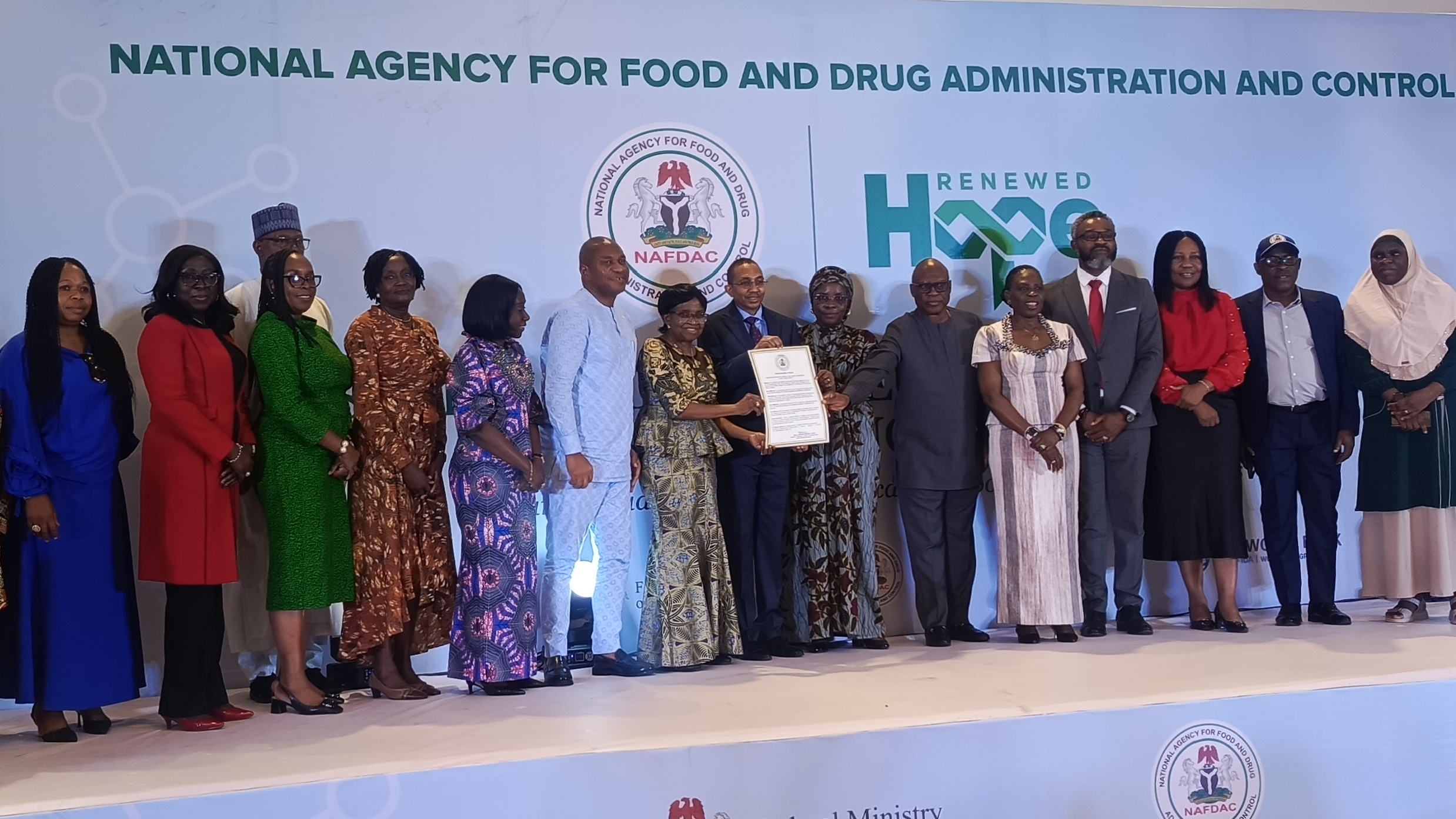
The commitment was reinforced at a one-day stakeholders’ engagement in Abuja on NAFDAC’s regulatory transformation and its growing role within Africa’s evolving medicines governance architecture.
Director-General of NAFDAC, Mojisola Adeyeye, said the agency is deliberately shifting focus toward expanding domestic drug production as part of a broader strategy to strengthen Nigeria’s medicine security and reduce dependence on imports.
She explained that government policy is now geared towards an innovation-driven and market-supportive pharmaceutical environment that encourages local manufacturers while maintaining strict regulatory oversight.
According to her, Nigeria is already seeing gradual improvements in compliance and a steady decline in the circulation of substandard and falsified medicines, although she stressed that the fight remains ongoing and requires sustained vigilance.
“We are already seeing changes in behaviour across the system. Manufacturers are becoming more compliant, but this is not a process that will end quickly. It requires patience, enforcement and public awareness,” she noted.
Adeyeye also issued a strong warning on consumer safety, urging Nigerians to avoid purchasing medicines from unverified sources and to rely strictly on licensed pharmacies. She cautioned that unregulated drug markets remain a major entry point for unsafe products, adding that enforcement actions against illegal distribution channels would continue to intensify.
Beyond regulation, she said NAFDAC is also investing heavily in its workforce to ensure efficiency, discipline and accountability within the system. She explained that staff motivation is being balanced with strict internal oversight to ensure that regulatory responsibilities are carried out with integrity.
“Without a strong and disciplined workforce, regulatory outcomes cannot be achieved. We are building a system that rewards performance but also enforces accountability,” she said.
On continental cooperation, Adeyeye said the signing of the AMA treaty marks a major step toward harmonising regulatory systems across Africa and improving trade in pharmaceuticals. She noted that the framework will allow countries without manufacturing capacity to source medicines through trusted regional partnerships, including contract manufacturing arrangements.
She added that the goal is to move away from fragmented national standards toward a unified international regulatory benchmark that ensures safety, quality and efficacy of medicines across borders.
Also speaking at the event, the Director-General of the African Medicines Agency, Mimi Darko, said Nigeria remains a key partner in advancing Africa’s pharmaceutical regulatory integration. She noted that the agency enjoys strong backing from the African Union and that collaboration with Nigeria would significantly strengthen the continent’s capacity to combat counterfeit medicines.
According to her, Nigeria’s regulatory experience and institutional strength will play a critical role in shaping AMA’s effectiveness across member states.
“The involvement of Nigeria strengthens the entire system. With stronger collaboration, we will achieve better regulatory outcomes for the continent,” she said.
In his goodwill message, the WHO Representative to Nigeria, Pavel Ursu, commended NAFDAC for what he described as sustained progress in regulatory science and public health protection.
He highlighted improvements in Nigeria’s laboratory systems, noting that the Central Drug Control Laboratory in Yaba has attained WHO prequalification status, while several other laboratories have secured international ISO accreditation for testing medicines, vaccines and related products.
He added that these developments have strengthened confidence in Nigeria’s regulatory system and improved its capacity to support local manufacturing and global health security.
Ursu further observed that strengthened post-market surveillance by NAFDAC has led to increased detection and removal of unsafe medicines from circulation, thereby improving supply chain integrity nationwide.
Representing the Federal Ministry of Health and Social Welfare, the Permanent Secretary, Daju Kachollum, stressed that no health system can function effectively without ensuring that medicines and food products meet strict standards of safety, quality and efficacy.
She said regulatory institutions must continue to balance enforcement with innovation to ensure that the health sector contributes meaningfully to national development.
Across all interventions, stakeholders agreed that Nigeria’s regulatory reforms and its alignment with AMA represent a turning point for pharmaceutical governance in Africa, particularly in harmonising standards, improving access to essential medicines, and strengthening health security across the continent.
