

The Federal Government’s flagship road projects under President Bola Ahmed Tinubu are being developed as a single interconnected transport system designed to bind Nigeria’s six geopolitical zones into one economic corridor network, the Minister of Works, Senator David Umahi, has said.
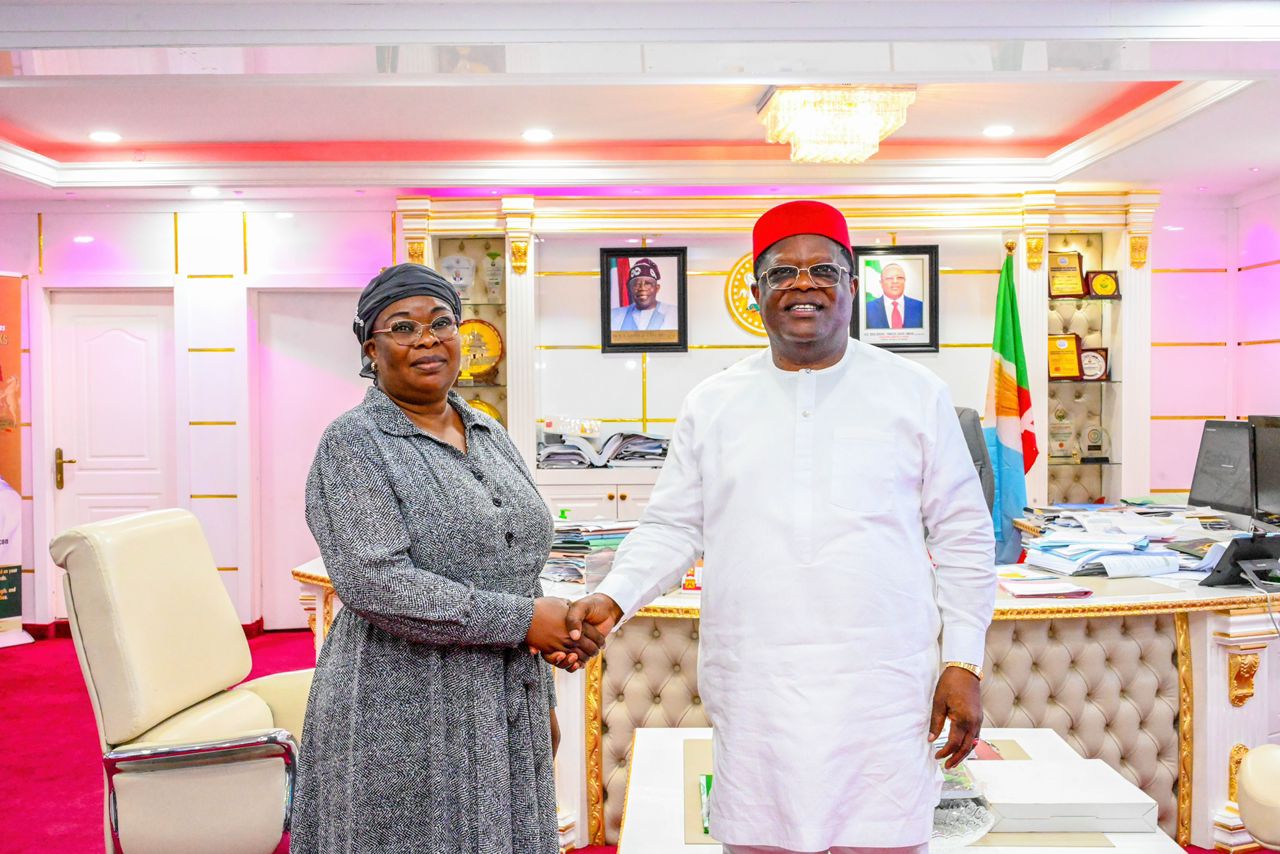
Umahi gave the explanation on Monday in Abuja during a strategic engagement with a delegation from the ECOWAS Bank for Investment and Development (EBID), which is currently appraising Section One of the Trans-Sahara Super Highway ahead of potential financing approval.
Led by Maimouna Sidibe, Head of the Basic Infrastructure Division, Department of Public Sector Corporations, the EBID team is assessing the project as part of its final stages of consideration for credit support.
Umahi said the four legacy highways were not conceived as isolated infrastructure, but as a deliberately linked national loop designed to reshape movement, trade and production patterns across the country.
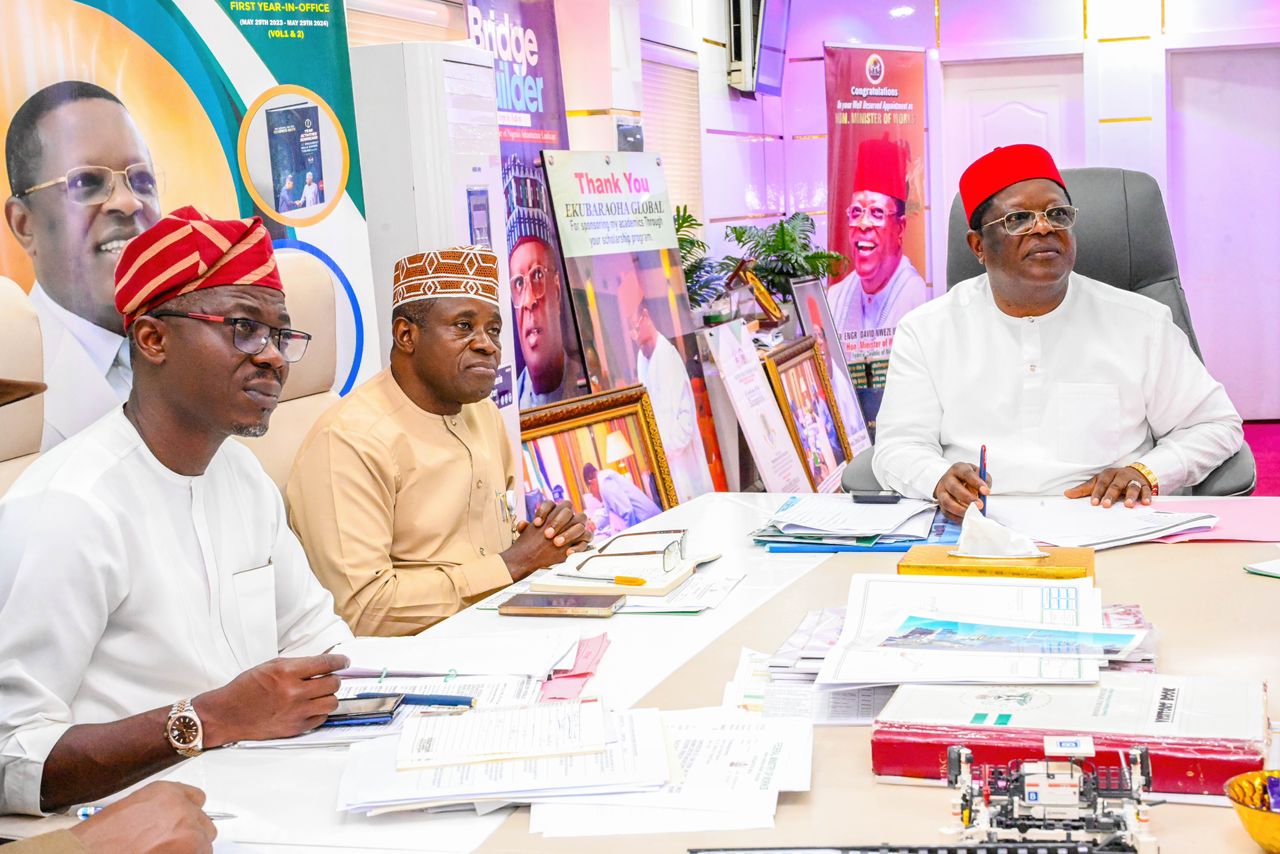
He explained that the Lagos–Calabar Coastal Highway feeds directly into the Trans-Sahara Super Highway at Ndibe Beach in Cross River State, creating what he described as a continuous east–north spine of national connectivity.
According to him, Section One of the Trans-Sahara corridor covers 123.64 kilometres from Ndibe Beach to the Benue border, while additional stretches have already been awarded across Benue, Kogi and Nasarawa States.
The Minister said the corridor is historically significant as a major agricultural route, stressing that its development would strengthen food distribution networks and reduce post-harvest losses across producing states. He added that once completed, the highway would reduce travel time between Calabar and Abuja to about four hours, while opening up large agricultural and industrial clusters in Ebonyi, Benue and Cross River States.
Umahi further disclosed that the design includes integration of dams along the corridor for irrigation and power generation, positioning the project as a broader economic development platform rather than a conventional road scheme.
He also explained that the Trans-Sahara Super Highway connects into the Abuja–Akwanga axis and extends through Jos, Bauchi, Gombe, Biu and Maiduguri, reinforcing mobility across the North-Central and North-East regions.
The Minister said the Gombe–Biu section, recently flagged off, spans 125 kilometres and is being constructed as a six-lane carriageway, while procurement processes are ongoing for the Bauchi–Gombe segment.
Umahi also outlined a proposed coastal linkage that would connect the Lagos–Calabar corridor to the Sokoto–Badagry Super Highway through Victoria Island, passing through a 3.5-kilometre tunnel and island alignments at Ogogoro and Snake Island before terminating in Badagry. He said when all corridors are viewed together, they form a nationwide loop that enables seamless cross-country movement across all six geopolitical zones within a maximum of two days.
On implementation status, Umahi said Section One of the Trans-Sahara Super Highway, being handled by Infioues, has surpassed 20 per cent completion, adding that sustained financing is critical to maintaining construction momentum as work progresses.
He commended EBID for its technical engagement and described the timing of its assessment as crucial to advancing funding discussions.
Earlier, Sidibe said the project had already cleared the bank’s first credit committee and was now undergoing detailed appraisal ahead of the next approval stages.
She disclosed that the proposal would proceed to the second credit committee in the coming week before being forwarded to the Board of Executive Directors in early July for final consideration.
Sidibe noted that Nigeria had already provided about 30 per cent counterpart funding, describing the project as a priority investment with strong institutional commitment and long-term durability estimated at up to 50 years.
Both parties expressed optimism that the financing process would be concluded promptly, paving the way for accelerated delivery of the Trans-Sahara Super Highway and other strategic national road projects.
