

By Vicky Attah, Correspondent
Experts, government officials and media stakeholders have stressed the need for stronger family involvement in addressing Nigeria’s growing drug abuse problem, saying parents and caregivers remain the most effective defence against substance abuse among young people.
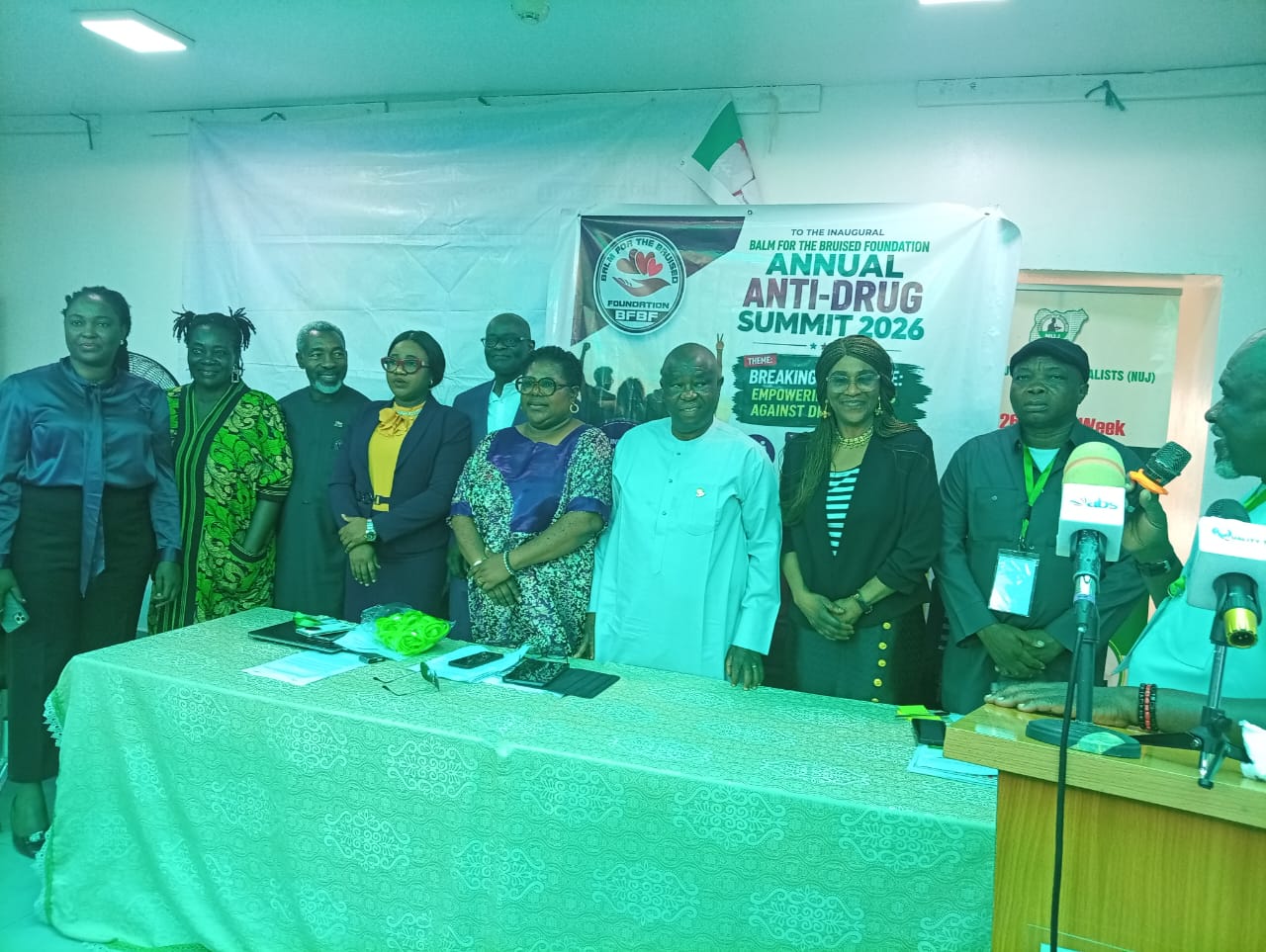
The call was made on Monday at the maiden Balm for the Bruised Foundation (BFBF) Annual Drug-Free Future Summit (DFFS) 2026 held at the Nigeria Union of Journalists (NUJ) FCT Council Press Centre, Utako, Abuja.
The summit, themed “Breaking the Cycle: Empowering Families Against Drug Abuse,” was organised to mark the official launch of the foundation and the 50th birthday celebration of its convener, Princess Ekwi Ajide.
In her welcome address, Ajide described drug abuse as one of Nigeria’s most pressing social challenges, saying families continue to suffer its emotional, social and economic consequences.
She maintained that prevention is more effective than treatment, urging parents, teachers, faith-based organisations, community groups and government institutions to work together to equip young people with the values and support needed to resist substance abuse.
According to her, the summit represents the beginning of a broader movement aimed at strengthening families, empowering youths and building communities where hope prevails over addiction.
Ajide also launched her book, Impending Crisis: Drug Use Among Women in Nigeria, which highlights the increasing rate of substance abuse among women and advocates stronger research, policies and targeted interventions.
Presenting the keynote lecture, Dean of the Faculty of Management Sciences, Nile University of Nigeria, Professor May Ifeoma Nwoye, said drug abuse among youths is often linked to emotional and social pressures rather than poor choices alone.
She identified peer pressure, family instability, unemployment, emotional distress and lack of positive role models as major drivers of substance abuse, stressing that education and mentorship remain the most effective preventive measures.
Nwoye urged governments, educational institutions, parents, religious bodies and communities to invest more in quality education, counselling services, youth empowerment programmes, mental health support and mentorship initiatives.
Also speaking, Deputy Commander of Narcotics at the National Drug Law Enforcement Agency (NDLEA), Dr. Aliyu Omama, said the agency’s mandate now goes beyond arrests and drug seizures to include prevention, public enlightenment, counselling, treatment, rehabilitation and the reintegration of people recovering from substance dependence.
He encouraged families to seek professional help for relatives struggling with addiction rather than conceal the problem, noting that many affected persons have successfully recovered through NDLEA rehabilitation programmes.
In separate goodwill messages, President and Chairman of Council of the Nigerian Institute of Public Relations (NIPR), Dr. Ike Neliaku, National Chairperson of the Nigeria Association of Women Journalists (NAWOJ), Hajia Aishatu Ibrahim, and Chairperson of the NUJ FCT Council, Comrade Grace Ike, commended the initiative and called for sustained collaboration among government, the media, schools, civil society organisations, traditional and religious leaders in tackling drug abuse.
They also advocated continuous public enlightenment, stronger family support systems, expanded access to treatment and rehabilitation services, increased investment in research and greater media involvement in promoting behavioural change.
The summit ended with participants taking a Drug-Free Pledge, committing themselves to reject substance abuse, resist negative peer pressure, support people seeking recovery without stigma and promote a drug-free society.
Among those in attendance were representatives of the United Nations Office on Drugs and Crime (UNODC), NDLEA, Women Against Substance Abuse (WANSA), NIPR, NUJ, NAWOJ, academics, students, development partners, community leaders, faith-based organisations and other stakeholders.
