

By Joy Onu
The Federal Ministry of Industry, Trade and Investment (FMITI) has reaffirmed its commitment to advancing Nigeria’s industrial and trade development agenda through sustained reforms aimed at improving coordination, efficiency, and investment outcomes.
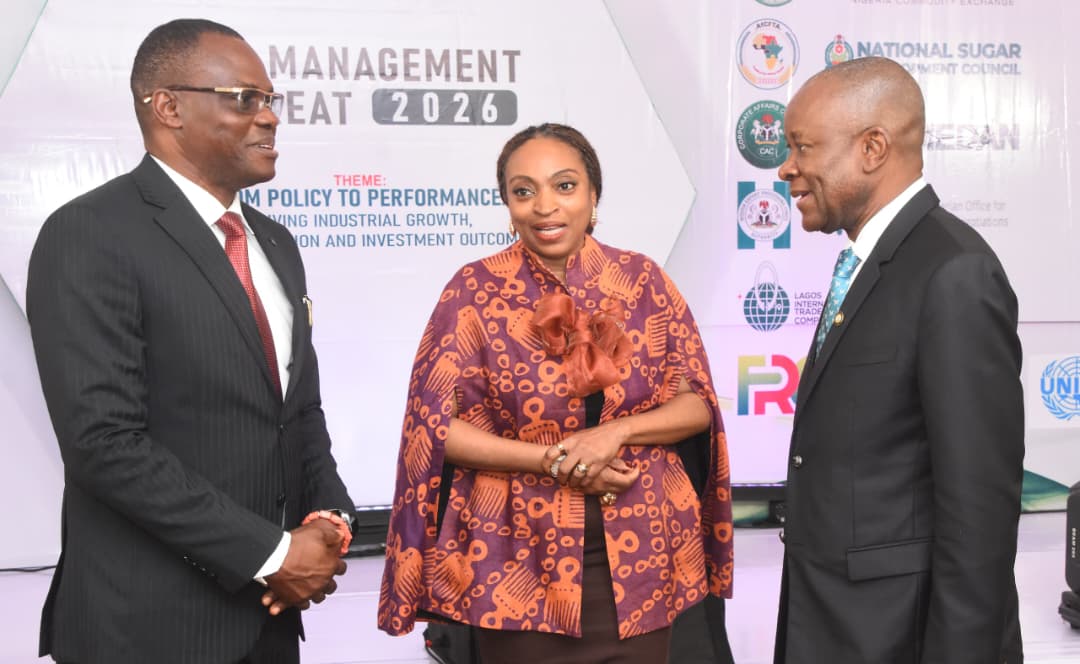
This renewed focus was highlighted at the Ministry’s 2026 Top Management Retreat held in Abuja from June 22 to 23, where senior officials reviewed ongoing initiatives and discussed priority areas for strengthening implementation across key sectors of the economy.
In a statement by the Head, Press and Public Relations, Obilor-Duru Augustina Okechi, the Ministry said the retreat provided a platform for reflection, alignment, and improved coordination toward delivering more impactful economic results.
The meeting, themed “From Policy to Performance: Driving Industrial Growth, Trade Expansion and Investment Outcomes,” underscored the need to ensure that policy efforts are steadily translated into improved industrial output, trade performance, and investment growth.
Minister of Industry, Trade and Investment, Dr. Jumoke Oduwole, said Nigeria continues to record encouraging progress in key economic indicators, including about $21 billion in capital inflows in 2025 and over $6.1 billion in non-oil export earnings.
She also noted increased participation in regional trade under the African Continental Free Trade Area (AfCFTA), alongside ongoing support for more than 115,000 Micro, Small and Medium Enterprises nationwide.
She said the Ministry has continued to strengthen its implementation of AfCFTA-related commitments while improving frameworks for investment promotion, export facilitation, and intellectual property administration to enhance competitiveness.
Looking ahead, she explained that the Ministry’s 2026 focus will include expanding opportunities for Nigerian products, strengthening domestic production capacity, attracting investment, and making greater use of digital tools to improve service delivery.
Minister of State for Industry, Senator John Owan Enoh, said the Ministry is placing renewed emphasis on tracking implementation progress through a 90-day performance review cycle designed to support accountability and timely delivery.
He noted that the Nigeria Industrial Policy continues to provide a framework for interventions across manufacturing, MSME development, skills, infrastructure, financing, and export competitiveness, with increasing attention on outcomes such as jobs and productivity.
Permanent Secretary of FMITI, Dr. Chris Osa Isokpunwu, said the retreat reflects a continued effort to strengthen results-oriented governance, adding that greater collaboration across agencies will support more effective implementation of reforms.
The United Nations Industrial Development Organization (UNIDO), UNIDO, also reaffirmed its support for Nigeria’s industrialisation efforts, while legislative partners expressed continued backing for policies aimed at improving competitiveness and encouraging private sector participation.
FMITI said it remains committed to sustaining reforms that will support industrial expansion, strengthen exports, and attract investment as part of Nigeria’s broader long-term economic transformation goals, including the aspiration of a $1 trillion economy.
