

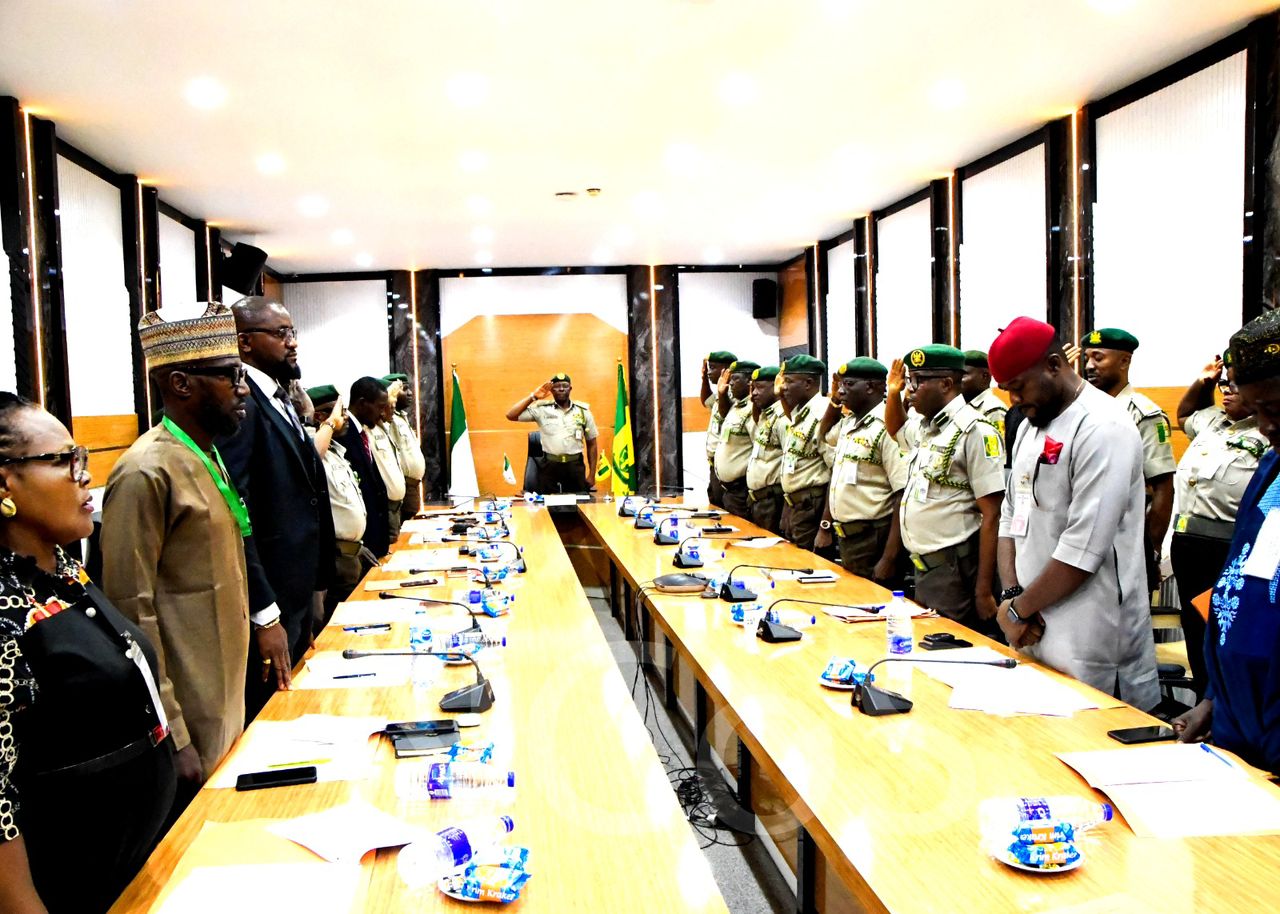
The Nigerian Correctional Service (NCoS) has inaugurated its second Public-Private Partnership (PPP) Project Delivery Committee as part of efforts to accelerate infrastructure development, improve staff welfare, and strengthen inmate rehabilitation across the country.

The Controller-General of Corrections, Sylvester Ndidi Nwakuche, inaugurated the committee at the Service’s National Headquarters, describing the initiative as a major step in the ongoing reforms aimed at leveraging private sector investment to modernise the nation’s correctional system.
The committee has been tasked with overseeing the implementation of key PPP projects, including the establishment of Correctional Farm Centres in Adim, Cross River State, and Itu, Akwa Ibom State, as well as the construction of modern residential estates for correctional personnel at Goron Dutse and Kurmawa in Kano State.
Speaking at the inauguration, Nwakuche said the committee would ensure that all approved partnerships are implemented in a transparent, accountable, and efficient manner to deliver tangible benefits to correctional officers, inmates, and host communities.
He noted that the projects were approved under the Infrastructure Concession Regulatory Commission (ICRC) framework and are in line with the provisions of the Nigerian Correctional Service Act, 2019, which emphasises rehabilitation, reintegration, and improved correctional administration.
According to the Controller-General, the housing project, being executed in partnership with Tamidan Nigeria Ltd, is expected to improve the living conditions of correctional personnel through the provision of modern residential estates.

He added that the Correctional Farm Centres, to be developed in collaboration with Vians 100% Nigeria Ltd, will enhance inmate rehabilitation by providing agricultural training, vocational skills, increased food production, and sustainable empowerment opportunities for inmates after their release.
Nwakuche stressed that the initiatives align with the Federal Government’s reform agenda of building a correctional system that prioritises rehabilitation, productivity, and human capital development.
Responding on behalf of the committee, the Deputy Controller-General of Corrections in charge of Works and Logistics, Amos Kupan, thanked the Controller-General for the confidence reposed in the members. He pledged that the committee would carry out its responsibilities with diligence, transparency, and accountability to ensure the successful delivery of the projects and value for public investment.
Representatives of the project partners also expressed commitment to delivering the projects as scheduled. Speaking on behalf of Vians 100% Nigeria Ltd, Oji-Okoro Kenechi assured stakeholders of the company’s commitment to excellence and timely execution, while the Director of Operations and Productivity at Tamidan Nigeria Ltd, Alhaji Dahiru Sabiu, promised quality project delivery.
Earlier, the Officer-in-Charge of NCoS Public-Private Partnerships, Assistant Controller of Corrections EC Onuka, said the committee was established to strengthen project oversight, monitor compliance, and safeguard government interests throughout project implementation.
He disclosed that it is the second PPP Project Delivery Committee established by the Service, noting that the first committee successfully coordinated the concession process that led to the establishment of a Shoe and Garment Factory in Aba, Abia State, and a Ternary Factory in Kano State, both of which continue to provide vocational training and productive engagement for inmates.
The ceremony ended with a vote of thanks by the Deputy Controller-General in charge of Inmates Training and Productivity, Nicholas Obiako, who commended the Controller-General’s leadership and praised development partners for supporting reforms aimed at transforming correctional administration in Nigeria.
The Service said the inauguration of the committee reinforces its commitment to building strategic partnerships that improve correctional infrastructure, enhance staff welfare, promote inmate rehabilitation, and contribute to national development.
