

By Vicky Attah, Correspondent
Operation HADIN KAI has recorded another major breakthrough in its counter-insurgency campaign with the arrest of five suspected terrorist logistics suppliers in Borno State, in what the military described as a strategic effort to cripple the supply networks that sustain terrorist operations across the North-East.
In a statement issued on Tuesday, the Acting Military Information Officer, Headquarters Joint Task Force (North East) Operation HADIN KAI, Capt. Mohammed Goni, said the suspects were apprehended at about 1:30 p.m. on July 20 by troops of the 112 Task Force Battalion, working alongside Hybrid Forces, during a routine security operation in Mafa Local Government Area of Borno State. He said preliminary investigations revealed that the consignment was destined for a vendor in N’Djamena, Chad Republic, while part of the concealed medical supplies was to be transloaded into another truck near the Nigeria–Chad border in what investigators believe was an attempt to disguise the movement of the consignment and evade security checks.
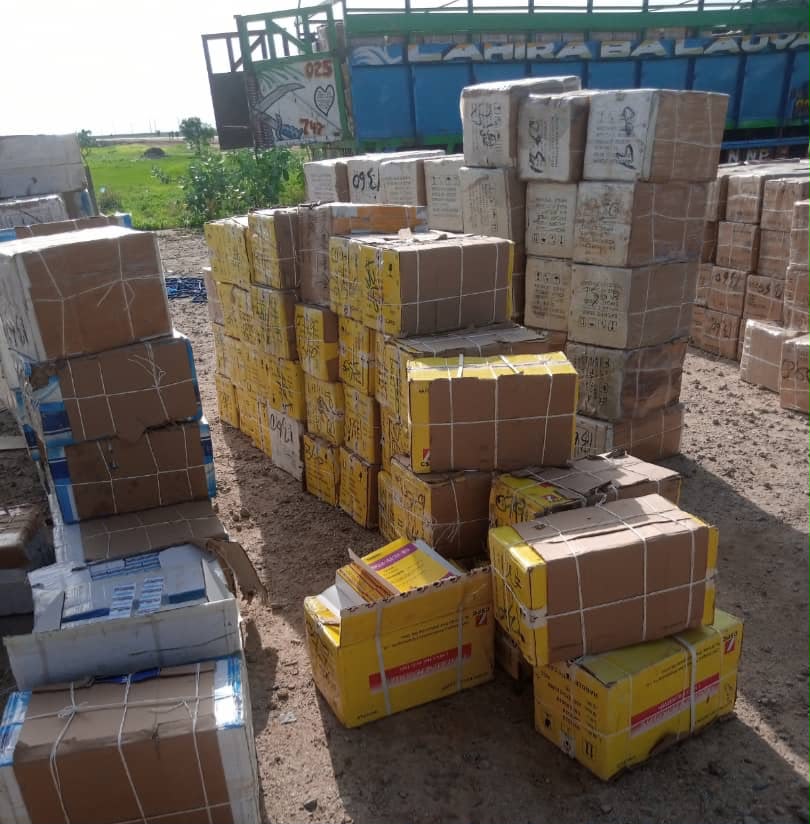
According to the military, the suspects were transporting 491 cartons of Albe Stark 2.5 per cent dewormer and 100 cartons of multivitamin injections for animals without the required waybill or supporting documentation.
A thorough search of the vehicles uncovered additional medical supplies concealed among the cargo, including 32 cartons of Diclofenac Sodium Injection, 58 cartons of Benzylpenicillin Sodium BP, six cartons of Dexamethasone Injection and 51 cartons of Metronidazole Intravenous Infusion. Troops also recovered 30 units of 80-inch LG plasma televisions, 152 empty Bagco sacks and seven mobile phones.
The five suspects are currently in the custody of the 24 Task Force Brigade, where further investigations are underway to establish the full scope of the suspected logistics network and any possible links to terrorist groups operating in the region.
The military described the interception as another significant breakthrough in its sustained campaign to dismantle terrorist logistics and support networks, stressing that cutting off supply routes is central to weakening insurgent groups and denying them the resources needed to sustain their activities.
Goni said intercepting suspicious consignments before they reach their intended destination deprives terrorist elements of critical supplies, degrades their operational capability and restricts their freedom of action.
He reaffirmed the military’s commitment to identifying and dismantling all networks that directly or indirectly support terrorist activities, noting that targeting logistics and supply chains is as crucial to defeating insurgency as direct military engagements with armed fighters.

The military advised pharmaceutical distributors, transporters, healthcare providers, humanitarian organisations and other stakeholders transporting bulk medical, pharmaceutical or agrochemical consignments within the North-East to ensure such shipments are properly documented and, where necessary, coordinated with the appropriate military authorities.
According to the statement, the measure is intended to facilitate legitimate commercial and humanitarian activities while preventing terrorist elements from exploiting supply chains to move materials under the guise of lawful business.
The military also urged members of the public to remain vigilant and continue providing timely and credible information to security agencies, saying public cooperation remains vital to exposing terrorist logistics networks, supporting ongoing operations and consolidating lasting peace, security and stability across the North-East.
The latest interception underscores the military’s growing emphasis on targeting the logistical backbone of terrorist groups rather than focusing solely on battlefield engagements. By dismantling supply networks, intercepting suspicious consignments and disrupting support structures, security forces aim to further weaken insurgent organisations, limit their operational reach and deny them the freedom of action needed to sustain attacks across the region. This strategy, the military said, remains a key pillar of ongoing efforts to restore lasting peace and stability in the North-East.
