

By Joy Onu, Abuja
The Federal Government has stepped up efforts to improve agricultural productivity by engaging fertilizer producers on strategies to increase fertilizer usage among farmers and strengthen Nigeria’s food security.
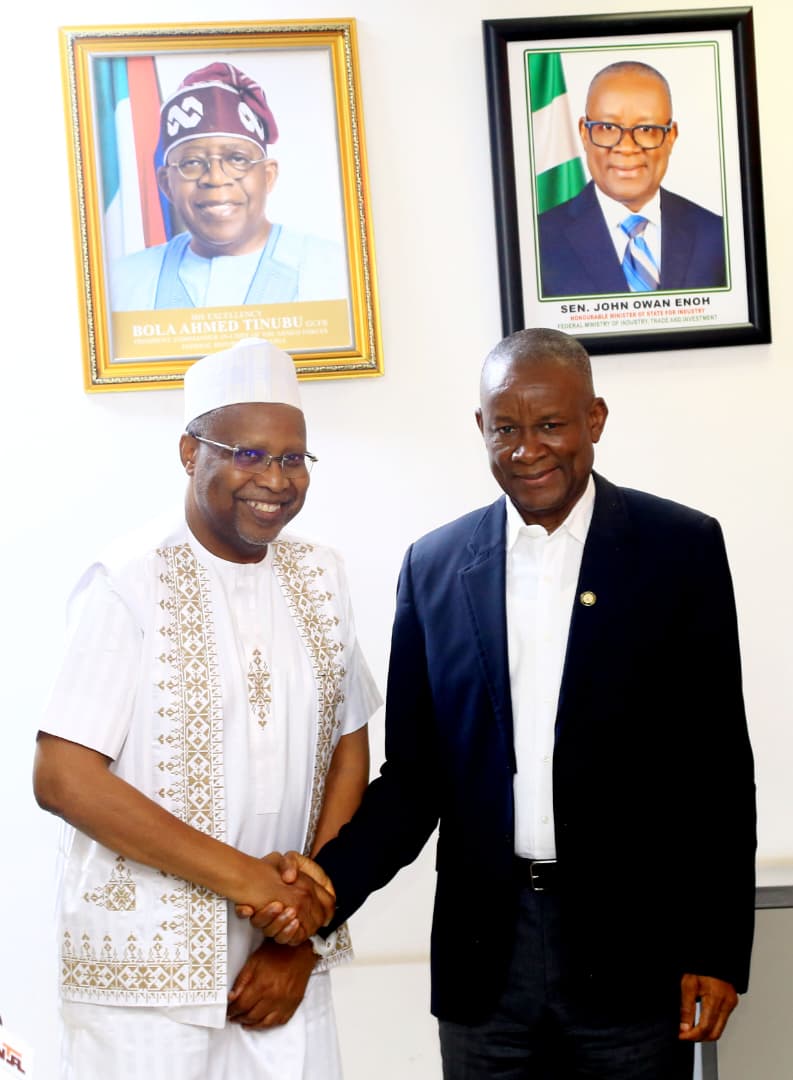
In a press statement issued by the Head, Press and Public Relations at the Federal Ministry of Industry, Trade and Investment, Augustina Obilor-Duru, the meeting brought together officials of the ministry and the leadership of the Fertilizer Producers and Suppliers Association of Nigeria (FEPSAN) to review the state of the fertilizer sector and identify practical steps to make farm inputs more accessible nationwide.
Leading the government delegation, the Minister of State for Industry, John Owan Enoh, said improving access to fertilizer remains critical to raising crop yields and supporting national food security.
He noted that stronger coordination between government institutions and private sector operators in the fertilizer value chain would help ensure that Nigeria’s growing production capacity delivers tangible benefits to farmers across the country.
Industry stakeholders at the meeting highlighted the significant expansion recorded in Nigeria’s fertilizer sector over the past decade. According to FEPSAN, the number of fertilizer blending and manufacturing plants nationwide has increased from about 38 in 2015 to more than 100 today.
The development, the association noted, reflects increased private sector participation, rising production capacity, and expanding employment opportunities within the industry.
Despite the progress, the association expressed concern that fertilizer consumption among Nigerian farmers remains relatively low compared with the country’s production potential.
Nigeria currently has the capacity to produce about 16 million metric tonnes of various fertilizer products annually, yet domestic consumption stands at roughly 2 million metric tonnes.
FEPSAN President, Abubakar Sadiq Kassim, said the low rate of fertilizer application continues to affect crop productivity in many farming communities.
He explained that farmers in Nigeria apply an average of about 24 kilograms of fertilizer per hectare, which is below the African target of 50 kilograms per hectare.
Kassim stressed that improving farmers’ access to fertilizer and encouraging wider adoption would be crucial to increasing agricultural output and sustaining growth in the sector.
The meeting also highlighted the role of major fertilizer producers such as Indorama Eleme Fertilizer & Chemicals and Dangote Fertilizer Limited in strengthening Nigeria’s position in the fertilizer market through large-scale urea production for both local consumption and export.
Participants further recalled the impact of the Presidential Fertilizer Initiative launched under former President Muhammadu Buhari following diplomatic engagements with Morocco, which helped stimulate local fertilizer blending through partnerships that combine local and imported inputs.

At the end of the engagement, government officials and industry leaders agreed to deepen collaboration on policies and initiatives aimed at increasing fertilizer availability, stimulating demand among farmers, and supporting Nigeria’s long-term food security objectives.
