


By Victoria Attah, Correspondent
At the international wing of the Nnamdi Azikiwe International Airport, Abuja, the usual rhythm of arrival—queues, document checks, and hurried explanations at inspection desks is beginning to shift, quietly but deliberately.

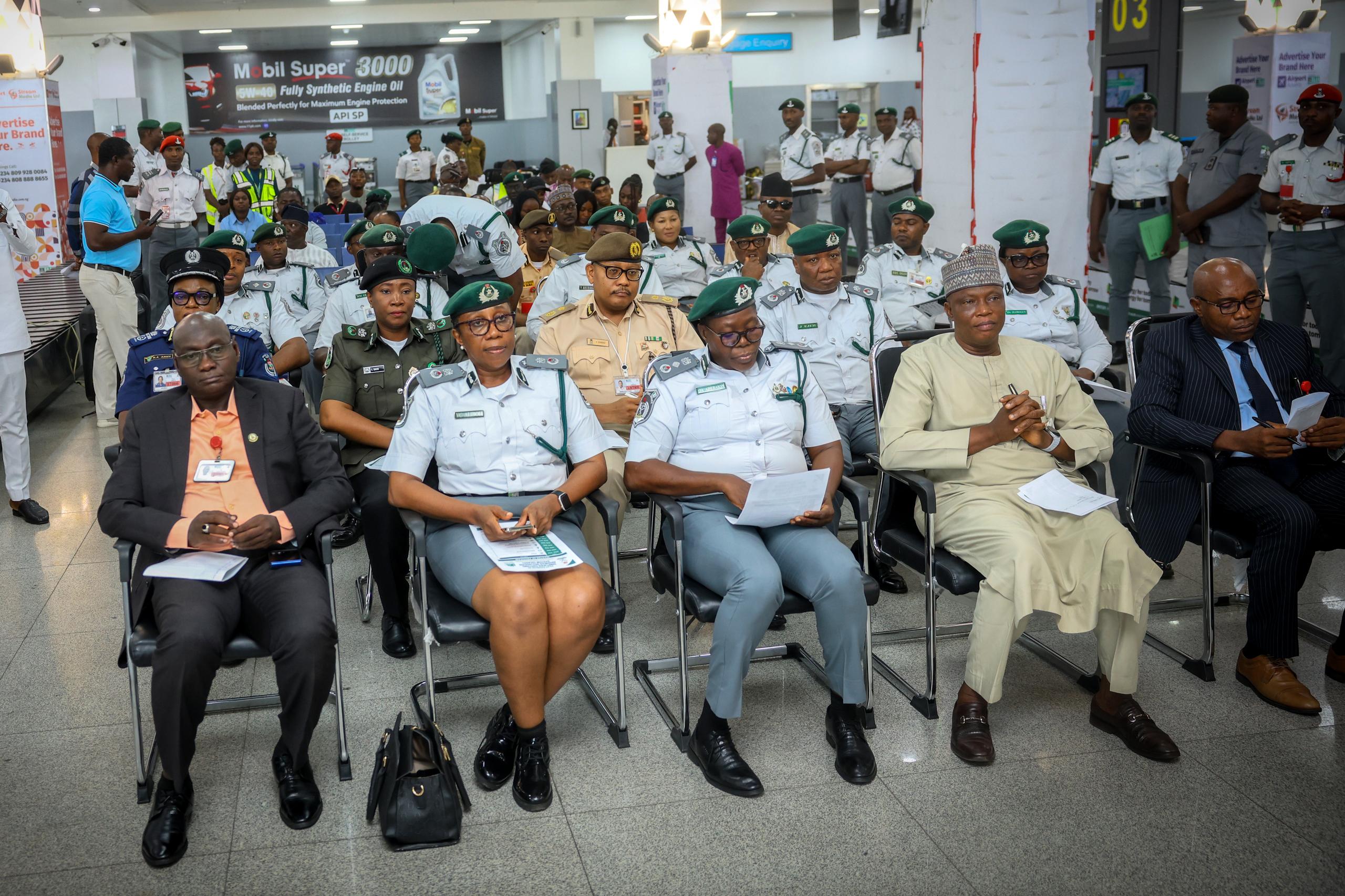
On Monday, 18 May 2026, the Nigeria Customs Service (NCS) introduced a new passenger declaration system known as the Simplified Customs Advanced Declaration System (SCADS), a digital platform designed to change how travellers declare their baggage before entering the country.
For passengers who have long grown accustomed to filling paper forms on arrival or navigating manual checks after long-haul flights, the idea is simple but significant: declare before you land, clear faster when you arrive.
Customs officials say that is exactly the point.
The platform allows inbound travellers to submit declarations ahead of time, digitally capturing information on luggage and items before they step into the country. In practical terms, it is an attempt to compress one of the most tedious parts of international travel into a few minutes on a mobile device or online portal.
Deputy Comptroller-General of Customs in charge of ICT and Modernisation, Oluyomi Adebakin, described SCADS not just as a software upgrade but as a reset of experience and process. She said the Service deliberately rebuilt the system after earlier operational setbacks on a previous platform. In her words, those challenges became the blueprint for something more stable and more efficient.
But beyond the official language of reform and modernisation, the real question sits with passengers: what does this change feel like on the ground?
For frequent international travellers, airport clearance in Nigeria has often been associated with unpredictability, long queues at peak hours, manual inspections that vary by desk, and delays that stretch the fatigue of long flights. SCADS is designed to soften that experience, replacing physical repetition with digital pre-clearance.
Officials also say the system introduces something more structural than convenience: consistency.
With SCADS, customs duties are expected to be automatically generated based on declared items, quantities, and values. That removes, at least in principle, the room for subjective interpretation that has long defined manual assessment at inspection points.
Still, reforms of this scale rarely unfold without testing. That is why the FCT Area Command has been chosen as the pilot site for the five-day trial running from 18 to 22 May 2026. Within that window, officers will observe how the platform performs under real passenger flow unfiltered, unpredictable, and often busy.
Comptroller Victoria Alibo, who oversees the pilot command, described the selection as a vote of confidence in the command’s operational readiness. She noted that SCADS merges baggage declaration with e-commerce reporting, reflecting the growing reality of cross-border online purchases now common among travellers.
At the airport, where technology often meets human urgency, the success of SCADS will depend on more than infrastructure. It will depend on adoption, how quickly passengers adjust, how effectively officers adapt, and how seamlessly digital instructions replace familiar physical routines.
For now, the system represents an early step in what Customs hopes will become a broader transformation of border management in Nigeria.
And as travellers move through Abuja’s international terminal in the coming days, the change may not be loud or dramatic. It may simply appear as something missing: shorter queues, fewer paper forms, and a quiet shift from manual scrutiny to digital flow.
